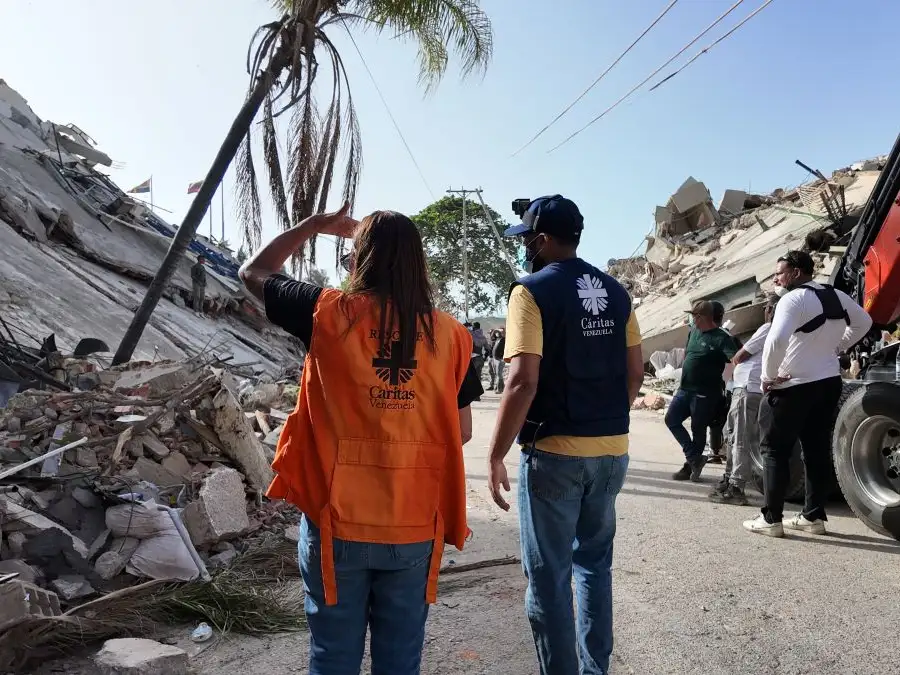
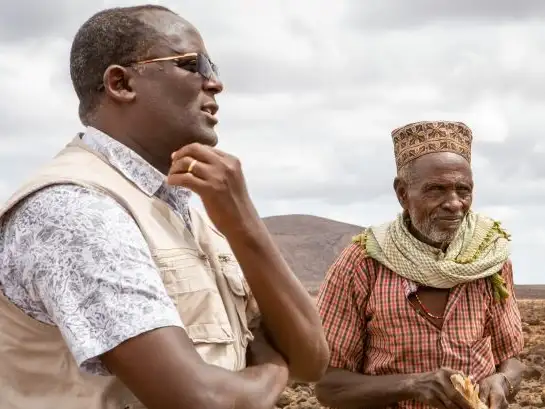
In the immediate response to Hurricane Eta, local charities, and organisations – including many of CAFOD’s partners - came together to form the Emergency and Solidarity Network.
They are working alongside government bodies to help shelter the thousands of people who were forced to evacuate their homes.
Combining their efforts, they were able to deliver food and hygiene kits to 250 families containing:
soap
female sanitary products
alcohol gel
disinfectant
basic medicines.
Caritas Honduras, who are working alongside families who have been impacted by storms and consequent floods, said:
“The country was already in tremendous poverty, then we had Covid-19 and it increased greatly. Now, with two hurricanes the situation is even more challenging.
“Despite so much sadness, many people have been willing to support each other, leaving clothes and food for people who have lost everything. The food is distributed to all the people, regardless of politics or religion.
“As part of the Emergency and Solidarity Network, we do not have the capacity to serve the entire Honduran population that suffers, but there are other organisations, churches, individuals and some small companies that are also assisting, to ensure everyone receives help.”
Many affected families are now in need of food, clothing and personal hygiene supplies, alongside personal protective equipment, to help prevent the spread of Covid-19.
The strongest storm on record to reach Nicaragua, Hurricane Iota struck the coast late on Monday 16 November and so far nine people across the region have been killed.
The hurricane brought winds of nearly 155 miles per hour (249 kph) and flooded villages that are still recovering from the impact of Hurricane Eta, which made landfall only a fortnight ago.
Local emergency experts are already assessing the situation and helping affected families. They said:
“When rivers overflowed, it flooded hundreds of families and caused massive damage.
“The material losses in families are many, there has been an increase in diseases, and many communities are now living in extreme poverty.”
Many families are now in need of water, food and help to begin to rebuild their communities.
In Colombia, a total of 25 out of 32 regions have been affected by recent storms and flooding.
Initial reports indicate that in Chocó alone, one of the 25 regions affected, three rivers - San Juan, Atrato and Baudó – are overflowing and there has been flooding in at least 14 municipalities.
The flooding has been extremely serious in some areas, including Cartagena, where 70 per cent of the city was flooded.
According to local government reports:
31,555 families have been affected
20 schools have been seriously damaged
between 50 and 100 hectares of crops have been lost.
In places like the Diocese of Quibdó in Chocó, the storms have only added to an already fragile situation. In the past few months, the area has seen six mass displacements due to armed conflict and COVID-19 outbreaks, that have impacted many families.
Additionally, due to the increased levels of rain, the Andes region of the country is now at risk of mudslides, which could lead to further emergencies.
The Colombian Bishop conference recently released a statement, sharing solidarity:
“The Catholic Bishops of Colombia express our fraternal closeness to all the people who are suffering from the disasters caused by the winter wave and the hurricanes throughout the country,” they said.
These recent floods have resulted in shortages of food and drinking water, the destruction of homes and transport links – including bridges - a loss of crops, and the death of many animals, which are a vital means of income for many families.
Local aid experts are already on the ground, assisting affected families.